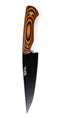
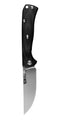
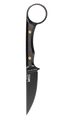
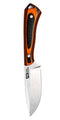




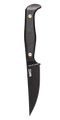
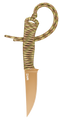
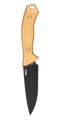
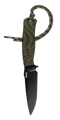









Our top pick for the best knife sharpener is the Work Sharp Precision Adjust Elite, a guided system that locks in repeatable angles from 15° to 30° across hunting, kitchen, and EDC blades.
For the best hunting knife sharpener out in the field, we point people to the MKC Field Knife Sharpener: a 2.6-ounce, dual-angle tool that I co-designed with Work Sharp for backcountry touch-ups. The Precision Adjust does its best work on the bench, while the MKC field tool stays in your pack.
Sharpening your own blades requires matching the tool to the job, finding the angle your hunting blade needs, and building a field routine that keeps an edge alive through a nine-day elk pack-out. Here’s how to find the best sharpener for you.
Best Knife Sharpener Picks by Category
|
Award |
Pick |
Why It Wins |
|
Best Overall |
Guided angles 15°–30° with triple-abrasive rods |
|
|
Best Budget |
Three grits in one bench tool under $60 |
|
|
Best Guided |
Locks the bevel so every stroke matches |
|
|
Best Field & Portable |
2.6 oz, adjustable angles, integrated broadhead wrench |
|
|
Best Electric |
Motorized belt system that handles paring knives up through hatchet edges |
Match Your Sharpening Angle to Your Blade Type
Hunting blades and kitchen blades call for different geometry. A hunting knife with a 12° per-side edge will chip on its first shoulder bone, and a kitchen knife at 25° will drag through a ripe tomato instead of slicing it.
|
Blade Type |
Per-Side Angle Range |
Why That Range |
|
Hunting & Field |
17°–25° |
Durable edge that survives bone contact, hide, and cordage without micro-chipping |
|
Kitchen & Chef |
15°–20° |
Fine, aggressive edge for produce and proteins on a soft cutting board |
|
EDC & Utility |
20°–25° |
All-purpose geometry for cardboard, rope, and light wood |
Match your sharpener to the angle you’re after. A guided system handles the math for you, since the clamp sets the bevel automatically. Freehand on a whetstone takes practice, and that’s where most owners lose their edge geometry.
Types of Knife Sharpeners That Actually Earn Their Weight
The best knife sharpener for your kit depends on the blade you’re maintaining and where you plan to sharpen it.
Whetstones
Whetstones give you the most control and the longest-lasting edge, but the type of stone you choose changes how you work and what your final edge looks like.
|
Whetstone Type |
Best For |
Upsides |
Downsides |
|
Water Stones |
Kitchen and chef knives, softer steels |
Cut quickly and polish to a refined finish |
Wear down faster and need soaking before use |
|
Oil Stones |
Hunting knives, toothier working edges |
Wear down slowly, last for years, and produce a bite that grabs hide and rope |
Leave an oily residue, and most sit on the coarser end of the grit range |
|
Diamond Stones |
Hard powder steels like MagnaCut, fast resets |
Cut fastest of any stone type, run dry, and last the longest |
Expensive up front, and aggressive material removal can over-sharpen a blade if you rush |
At MKC, oil stones are our default for producing the working edge we prefer on hunting blades, and we reach for diamond stones for the harder powder steels in our lineup. Water stones work best in the kitchen for your cooking knives.
The learning curve on any whetstone is real, so pair one with an angle guide until your muscle memory catches up.
Guided Sharpeners
Guided systems clamp the blade and set the angle for you. The Work Sharp Precision Adjust Elite is our default pick, with rods from 220 grit through fine ceramic, an adjustable range of 15°–30°, and no water or oil required. First-time sharpeners get results in minutes, and that’s the shortcut most owners actually need.
Pull-Through Sharpeners: The Carbide Caveat
Pull-through sharpeners drag the blade through V-shaped abrasive slots. They work quickly, but they also work aggressively. Carbide slots strip a lot of metal fast, which shortens the life of a good hunting blade and can leave a rough, wire-edge finish.
Save pull-throughs for cheap kitchen knives you plan to replace, and keep them away from your MKC knives.
Electric Sharpeners
Electric sharpeners move fast, and that speed cuts both ways. Heat from a spinning belt can affect the temper on a thin hunting blade if you rush the pass.
Machines like the Work Sharp Ken Onion Elite Mk.2 handle paring knives up through axes when the operator respects the low-speed setting. This makes them a solid fit for a busy kitchen or garage, but a poor choice as a hunter’s only tool.
Field Sharpeners
The best hunting knife sharpener for the field stays in the pack for touch-ups mid-hunt, and it needs to be small, light, and independent of power or water.
The MKC Field Knife Sharpener weighs 2.6 ounces, adjusts angles, and includes a broadhead wrench, which is enough to keep a Speedgoat 2.0 slicing through a full elk quarter. A field sharpener isn’t a full reset tool, so save the deeper resharpens for the bench when you’re home.
Sharpening Premium Powder Steels: MagnaCut, AEB-L, and 52100
Not all steel takes the same edge. Modern powder metallurgy blades cut longer and resist corrosion, and they demand better abrasives to sharpen properly.
MagnaCut stainless steel holds an edge for a long time. That same toughness resists sharpening on soft aluminum-oxide stones, so a diamond stone at 400 grit works best for reset work, and you can finish with 1,000+ grit for a clean working edge.
AEB-L, the stainless steel that shines in precision processing knives, takes a fine edge easily and responds well to water stones in the 1,000–6,000 grit range.
52100 ball-bearing steel sharpens fast on almost any stone, including both oil stones and diamond plates. Wipe carbon steel dry after sharpening and add a coat of MKC Blade Wax to fend off rust.

Choosing the Best Knife Sharpener: Portability vs. Precision
Two questions will decide the best knife sharpener for you:
- Where will you sharpen? Bench work at home means you can carry weight and use water, so a guided system or a full whetstone set is the right choice. Backcountry work means ounces matter, and you’ll want a field sharpener that runs dry.
- How much practice do you have? New sharpeners get results fastest with a guided system, and owners with a season of freehand under their belt get cleaner edges from a whetstone. Either way, everyone benefits from a honing rod between sharpenings.
For most owners, the best knife sharpener setup is two tools: a Work Sharp Precision Adjust Elite for the bench and an MKC Field Knife Sharpener for the pack. That pair covers roughly 95% of what a hunter and home cook will ever face.
Best Knife Sharpeners for a Trustworthy Field Maintenance Routine
Hunts are hard on blades, since cape, bone, cartilage, and cordage all pull the edge. Owning the best hunting knife sharpener only matters if you actually put it to work. Here’s the routine we run through the season.
Before the trip, reset the edge at home on a guided system or a whetstone. Confirm the angle matches the blade, since 20° per side works for most hunting blades, and strop the finish to remove any lingering burr.
Mid-hunt, run the MKC Field Knife Sharpener at the end of each animal or when the blade starts to drag. Ten seconds a side is often enough to bring back a working edge on 52100 or MagnaCut.
At camp, keep a Work Sharp Ceramic Honing Rod on hand for realignment between sharpenings. Honing isn’t the same as sharpening; it realigns the microscopic teeth on the edge and makes it last longer.
After the season, wipe every blade clean, dry them, and apply MKC Blade Wax before storage. Carbon steels like 52100 need this the most, but stainless powder steels like MagnaCut still benefit from the extra barrier. Parkerized and Cerakoted blades give up a little coating each time you sharpen, so owners who want the cleanest long-term look often go with a polished blade like our Speedgoat Ultra instead.
Why Trust Our Opinion on the Best Knife Sharpeners?
I founded MKC after the American Bladesmith Society certified me as their youngest-ever Master Bladesmith. We laser-cut and hand-grind every knife in-house, and that grinding work gives us direct feedback on how each steel takes and holds an edge.
When we tell you MagnaCut wants a diamond stone or that 52100 will strop back to hair-shaving sharp in seconds, that guidance comes from behind the belt sander, not a spec sheet.
Frequently Asked Questions About the Best Hunting Knife Sharpener
What is the best hunting knife sharpener for beginners?
A guided sharpener like the Work Sharp Precision Adjust Elite is the easiest place to start. It clamps the blade and sets the angle, so a first-timer gets an even, repeatable edge from stroke one. Pair it with the MKC Field Knife Sharpener for pack touch-ups.
What angle sharpens a hunting knife best?
A per-side angle of 20° covers most hunting blades. Softer game work can go finer, closer to 17°, and bone-heavy work or backup camp blades benefit from 22°–25° for extra edge durability.
Do I really need both a bench sharpener and a field sharpener?
For serious use, yes, you’ll want both. The best knife sharpener setup uses bench tools to reset the geometry after the season and field sharpeners to keep that edge alive between resets. Trying to do both jobs with one tool sacrifices either performance at home or ounces in the pack.
How often should I sharpen my hunting knife?
A full reset once or twice a year works for most hunters. Add mid-hunt touch-ups every animal or every few hours of hard use. High-alloy steels like MagnaCut stretch that cadence longer than lower-carbon options.
The MKC Generations® Promise
Every MKC knife carries the MKC Generations® promise: we’ll resharpen your blade for free, forever, no matter how old or how hard-used it is. Send it in when the edge is gone and the geometry is off, and we will send it back cutting like new.
A bench sharpener at home saves you the shipping, and a field sharpener saves the hunt when the edge fails at mile eight. Owning both is how a knife earns a lifetime in your pack.
by Josh Smith, Master Bladesmith and Founder of Montana Knife Company