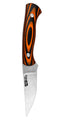
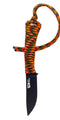
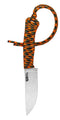
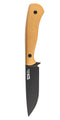
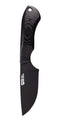
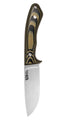

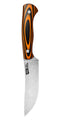
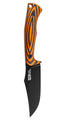
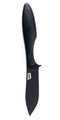
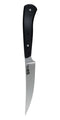
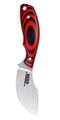
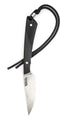
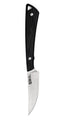
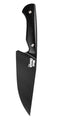
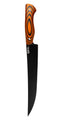
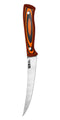
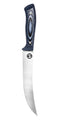
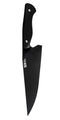
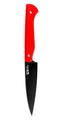
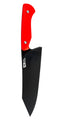
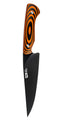
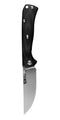
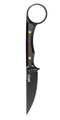
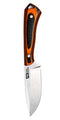
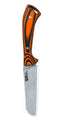
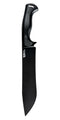
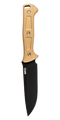
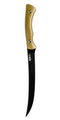
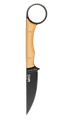
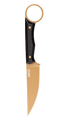
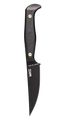
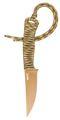
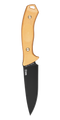
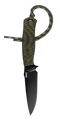
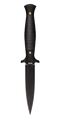







Scott and Seth Perkins of The Bearded Butchers have put our eight-inch Breaking Butcher through its paces since we developed it with them. It handles most of what comes into the butcher shop. But sometimes, breaking down a whole bison or removing large quarters calls for more blade.
The 10-inch Breaking Butcher is a blade we knew The Bearded Butchers needed but couldn’t manufacture until now. Building a long, narrow blade at this scale pushed our heat-treat process, our grinding, and our sheath production into new territory. The longer blade earns its place.

When the Eight-Inch Runs Out of Room
Our eight-inch Breaking Butcher was built in partnership with Scott and Seth Perkins, and it handles the bulk of their processing work. If you’ve watched their live streams, you know they exclusively use MKC knives. But they still had a Victorinox 10-inch in the rotation for their biggest cuts, and they wanted that gone.
But the eight-inch has its limits. When a whole bison comes through the shop, or they’re pulling big quarters off an animal, two more inches of blade makes a real difference. The eight-inch works great for antelope, mule deer, and most common game. Moose, elk, bison, caribou: that’s where you need more reach.
The Bearded Butchers told us as much. They needed a blade that could cover the full range of what comes across their block, and the eight-inch just couldn’t reach the biggest cuts. This is a professional-level tool built for the people who process meat for a living.
Shaped by How Professional Butchers Actually Cut
Watch The Bearded Butchers work, and you’ll notice something: They turn the knife in their hands, dig in, and pull through a cut. That reverse-grip style drives how they move through large pieces of meat, and we built this handle around that motion.
We sent Scott and Seth a few handle prototypes and let them work with each one for about a week. Their feedback dialed in every detail: a thumb ramp for control when you choke up on the blade, a palm swell that locks the knife in your hand during long pulling cuts, and a handle width that stays comfortable through an entire processing session.
Josh went on a hunt with them in New Mexico for in-field testing across the full Bearded Butchers line. That hands-on time is where the small details get dialed in: the kind of feedback you only get when people use the knife as an extension of their hands.
The result is a handle contoured for a pulling grip, with moisture-resistant G10 scales that hold steady when your hands are wet. Every curve in this handle traces back to how professional butchers actually cut.

A Trailing Point Built for Long, Pulling Cuts
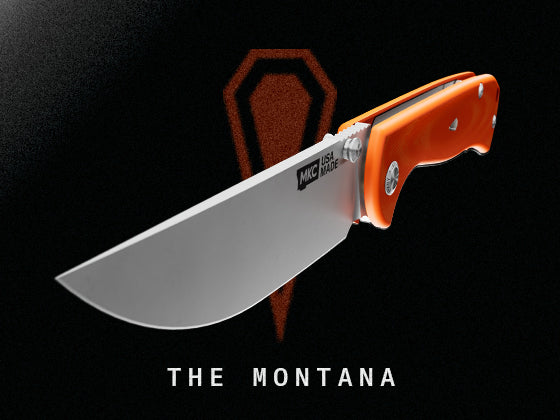
The 10-inch blade carries an exaggerated trailing point: a highly upswept profile that gives you a longer cutting edge to work with on large pieces of meat.
The generous belly is where the work happens. When you’re pulling through a big section, that extra blade length means you can cover more of the cut without repositioning.
For the kind of breaking work this knife was built for, removing quarters and working through the biggest cuts, that trailing point geometry makes the difference between fighting the cut and flowing through it.
MagnaCut Stainless Steel Stands Up to the Work
The original Breaking Butcher runs AEB-L steel. The 10-inch steps up to MagnaCut stainless steel, the same steel we’ve been moving across the lineup.
MagnaCut holds its edge through long cutting sessions, so you spend more time working and less time sharpening. It resists the constant moisture of butchering, and the edge won’t chip when you hit bone or cartilage.
When the edge does need attention, MagnaCut cooperates. It’s straightforward to resharpen, even if you’re still learning to maintain your own knives. You get a blade that stays sharp through the session and comes back to a working edge fast when it’s time to touch up.
Drop It, Grab It, Keep Cutting
If you’ve watched The Bearded Butchers on a live stream, you’ve seen how they work: knife in hand, then hooked onto the apron, then back in hand. That cycle repeats constantly through a session, and fumbling with a sheath breaks the rhythm.
Each 10-inch Breaking Butcher ships with an MKC Kydex sheath built around that workflow. The sheath is oriented 90 degrees from our standard setup, specifically for apron carry. And we added a taller lip around the opening that cradles the knife when you set it down. You can rest the blade in the sheath without shoving it down and clicking it into full retention. It just sits there, ready for the next grab.
When you do need to lock it in, press it down and it clicks into place. But between cuts, the cradle keeps your knife within reach without slowing you down.
Producing a Kydex sheath at this size pushed our manufacturing capabilities. We didn’t have presses big enough to mold Kydex at this scale before. We’ve since invested in expanding our sheath manufacturing, and we now produce the 10-inch Breaking Butcher’s sheath in-house.
Free Sharpening for Life and Beyond
MKC Generations® is our promise to restore your knife to its original, unmatched working condition.
We’ll clean, sharpen, repair, and reshape your 10-inch Breaking Butcher when needed, and rewrap paracord handles, all free of charge. The wear marks and scuffs stay. Those tell the story of the work you’ve put in, and we respect that.
by Josh Smith, Master Bladesmith and Founder of Montana Knife Company